

Welcome to the Ballroom’s gonna be an anime, and I can’t help but feel excited. At a time when lesser known sports, such as figure skating and rugby, are getting some love, I’m happy that dancesport is joining the party. (more…)
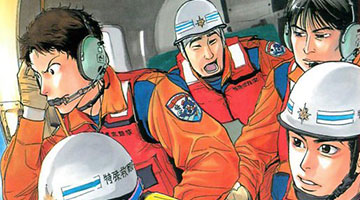

Not once did I ever imagine that I would be so engrossed over a rescue team. When I was young, Baywatch glamorised rescues on the telly. Having lived along a typhoon belt, I knew better heroes than those lifeguards in orange. Every typhoon season, I bear witness to neighbours, friends, and families braving the torrential rain to save people. People didn’t need all the fancy boats and jet skis to save people. Courage was more than enough. As such, I often saw fictionalised rescues with great contempt. However, stories like Tokkyuu!! are an exception.
Written by Komori Yoichi and drawn by Kubo Mitsuro, Tokkyuu!!‘s about the Japanese Coast Guard’s Special Rescue Unit based at Haneda Airport. This unit, known for their nickname Tokkyuu, is tasked to pursue dangerous rescue missions along the Japanese coast. If you see a news bit where men are rescuing ship crews via helicopters, then that rescue team are members of Tokkyuu. They are one of the best rescue teams in Japan. And the manga’s protagonist, Kanbayashi Hyogo, dreams of becoming a part of Tokkyuu.

Tokkyuu!! begins much like every shonen story. Kanbayashi is a young and idealistic coast guard whose goal was to be a part of Tokkyuu. This dream was motivated by the loss of his father who disappeared at sea when he was younger. While Kanbayashi has the physique and the passion to be a member of Tokkyuu, he learns through various challenges that it took more than guts to save lives. Throughout the series, Kanbayashi learns that it takes patience, knowledge, and discipline to develop these rescue instincts. These instincts allow him to safely rescue people without compromising his life.

This insightful knowledge on the values and hardships of becoming a member of Tokkyuu stems from Komori Yoichi’s knowledge and ties with the Japanese Coast Guard. In 1999, Komori had written Umizaru, a successful manga series about a local Japanese Coast Guard team. His personal interest with these heroes continued with Wa ga Na wa Umishi (2004-2008) and, of course, Tokkyuu!! (2004-2008). To make Tokkyuu!! as authentic as they could, Komori brought Kubo to observe many Tokkyuu activities. They even went to Indonesia to see a joint training between Tokkyuu and Indonesia’s Coast Guard. Kubo soaked all the things she saw like a sponge. Members of Tokkyuu were just as generous in sharing their experiences and stories to Kubo and Komori. The result was a wonderful story that immersed readers in the risky yet astounding lives of Tokkyuu rescuers.

One of the things I find amazing about Tokkyuu!! is Komori and Kubo’s tact in seamlessly integrating information about Tokky?’s activities without burdening the narrative. Unlike other manga that inundates us with lengthy lectures that set the context of the story, Komori and Kubo ease these facts into the story. As Kanbayashi and his colleagues saved people or participated in rescue exercises, I learned valuable technical details about being an elite coast guard in Japan. From swimming against currents to knowing how to control your rappel from a helicopter, Tokkyuu!! manages to share informative tidbits about the challenging yet exciting world of Japan’s elite rescue team. Not once did I ever felt bored in reading these details because just a panel later, the series reminds its readers why these things are valuable. All these skills, tools, and techniques were developed to save people.

What I found most compelling about Tokkyuu!! was how Komori and Kubo challenged notions of heroism. Unlike most shounen heroes who would rush towards danger, members of Tokkyuu were perpetually reminded that their heroism would place them at greater risk. While courage is seen as a valuable trait, its potential recklessness endangers the lives of the victims and the rescuers. When conducted with little or no foresight, heroic deeds could lead to death.
As early as the first chapter of the series, Tokkyuu!! sets the overarching tone for the series: safe and efficient rescue over urgency, courage, heroism and passion. This becomes a central struggle for Kanbayashi whose actions are deeply motivated by his heart than his head. True enough, this often led him to dangerous situations.

One scene that struck home was when he rescued a young girl that drifted across the sea. This reminded me of the time when I almost drifted far from the shore and I found it difficult to get back because of the currents. Fortunately, I managed to find my way back. Unfortunately for Kanbayashi, it took three days and an ingenious idea of burning their raft before Tokkyuu managed to find him and the girl he tried to rescue. Rather than rewarding Kanbayashi’s brave deeds, Komori and Kubo teach him lessons that made him reconsider his actions. While this eventually led to Kanbayashi’s growth, his bravery led him to make very difficult choices.
These poignant moments in the series made me an emotional wreck. I felt the Kanbayashi’s burden as it became increasingly difficult to choose between his life or the person he is trying to rescue. Since Komori and Kubo beautifully captured his desire and passion to save people’s lives, it was unbearable to witness Kanbayashi’s failures as a rescuer. They had no intention to glamorise his life as a member of Tokkyuu. Instead, Komori and Kubo showed the harsh realities of disasters, the pride of Tokkyuu, and the joy of saving lives.

More than admiration, Komori and Kubo wanted Kanbayashi and Tokkyuu to earn the respect of their readers. In showing their hardships, the series highlights their hard-earned pride as Tokkyuu. Kubo exceptionally illustrates this through scenes where Kanbayashi swims through raging currents or as he runs away, while holding a child, from an oncoming tsunami. As a result, these vulnerable moments show Kanbayashi’s pride as he gives his all to save these people. It’s hard not to respect that. As I hope and pray that all goes well in the end, I cannot help but respect Tokkyuu for all the things they tried to do. I think this respect stems from Komori and Kubo;s encounters with Tokkyuu rescuers who are not fragments of fiction but are heroes in real life.
All in all, Tokkyuu!! is an exceptional story about heroism. Komori and Kubo’s partnership created everyday heroes who pushed themselves to the limit to save people. As I reread this series in its entirety, it has found its way as one of my favourite manga of all time. The resilience of Kanbayashi and his TokkyÅ« colleagues inspires me to be resilient. This manga is amazing and I wish everyone read it. I wish it had an anime. I wish it had the same support as Yuri on Ice!! because it has a great story to tell. But perhaps my love for this series is a reflection of my own desire to see the same enthusiasm and skill from our local rescuers in the Philippines. I can’t help but imagine what it’d be like if our rescuers had the same discipline, rigour, and pride as Tokkyuu. Maybe, we could save more lives.
Tokkyuu?!! (Tokkyuu) by Komori Yoichi and Kubo Mitsurou
Serialised in ShÅnen Magazine, 20 Volumes,
Read via EbookJapan, Bookwalker JP, and Amazon JP
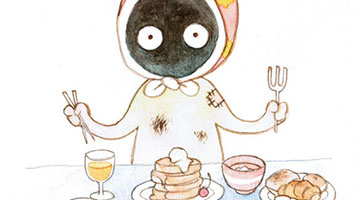

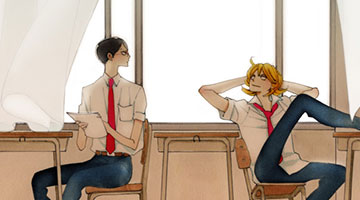

I got my DVD of Doukyuusei last week. To be honest, I didn’t want to get the DVD. I mean, yes, I wanted to watch the film. I was miserable that I missed the film when I had the chance to see it. But the DVD, I thought, it can wait another day. Like, maybe, when the PhD is over. I’m at that point in my Nakamura Asumiko fan life that I can wait a few months before buying her next release. I mean there was a time where I can wait years before I get a book so, I know that this can wait. But somehow, the Doukyuusei DVD kept on popping up on my Amazon suggestions.
And then it dawned on me that I might have a use for the DVD, so I eventually preordered it. When it arrived, I felt a slight tickle under my skin. I didn’t think I’d be so excited about it until I placed the DVD on my shelf beside my Doukyuusei manga. Suddenly, years of my BL life just flooded over me. I realised that had it not been for Nakamura Asumiko, I probably wouldn’t be where I am today.


A friend of mine and I were once talking about the value of hands in BL. Yaoi hands aside, we were wondering how there are some writers who value the very action of touching more than anything in BL. Beyond sex and all those things, there are boys love titles where I feel like a hand’s touch holds so much intent and desire. This can be seen in Scarlet Beriko’s Minori no Te (Minori’s Hand), the story of a masseuse who gave so much with a touch.

Hello! It’s been a while. ; w;
Super sorry for my recent inactivity. I’ve been weaning from social media and such and its mostly due to the fact that I’ve been reading and writing a lot of stuff for my thesis and I’ve dedicated most of my energies to it. I’m not complaining. I’m really enjoying it. Especially when I cross amazing classic works mentioned in my readings. I’ve read a few new interesting titles but for some reason I can’t get my head out of my thesis space. So, allow me to share a really nice shoujo classic I crossed for my thesis — Hideko Mizuno’s Fire! (1969-1971).

For some reason, my affection for anything Russian always involves espionage. It must be due to James Bond and all these Cold War movies. I have this mythical fascination that nothing good ever happens to Russia and that everyone’s always being watched. So when I heard that one of my favourite artists, Onorobo, was illustrating for a story in Sparkler Monthly that fills this myth, I can’t help but rush towards the site. Dusk in Kalevia turns out to be as mythical as I have imagined, if not more. The story of two ‘men’ caught at odds in a brewing revolution remains romantic. More so when you read them move in such a beautiful city as Kalevia.
Dusk in Kalevia circles around Toivo Valonen, an undercover agent sent to Kalevia to aid the resistance against the Communist regime, and Demyan Chernyshev, a KGB liaison officer. These two men have a long history that spans for centuries as it turns out that they are Angels who have been shaping the world’s history. This time, they’re shaping the history of Kalevia. Kalevia in itself is quite interesting. After having read the first few chapters of the story, Emily Compton’s descriptions of the city were rich and felt concrete, as if you can imagine the city in a postcard or in special in Parts Unknown. You get a sense of the town and how parts of it are majestic but at the same time crumbling. At first, I just allowed Compton to take me through the city and show me its vibrant tapestry. At one point, I was so drawn by the city that I googled it just in case I do make a trip to Russia. Sadly, Kalevia’s fictional. Fortunately, it felt real to me. And that’s good. I tend to shy from fantasy novels because my imagination is shot when I can’t see pictures or if the places have not been thoroughly described by the writer. Not that I expected this story to have a Tolkien-esque description of Kalevia. That’s not the case at all. As I said, Compton takes you through the city as it unfolds. She shows you the rubble in the street as Toivo escapes as if you can hear his heavy feet fall on the concrete. While I initially read this to see Onorobo’s illustrations, it was Compton’s narrative that really kept me going. Whenever Onorobo’s illustration pops out in a chapter, I feel my imagination stirred seeing what Compton described come into fruition. Together, they’ve made Kalevia alive, especially its characters, more so Toivo and Demyan.

Toivo and Demyan are just adorable. I might be wrong in using such a word to describe them. Let alone use this image to show these dynamics. In fact, I can see Demyan raising an eyebrow and getting one of his birds to stab me in the eye but I have fallen in love with them hence, they’ve become adorable to me. I have loved them enough to finally manage to say their names without thinking ‘that KGB dude and that journalist’. It took a while, I must confess. Eastern Europe has been outside of my fantasy that apart from Anastasia, Russian Czars, and a handful of politicians in history, specific Eastern European names are outside my fantasy. But as I said earlier, Compton and Onorobo were amazing in making these men alive, as if it was perfectly natural to hear them talking to their birds or brushing their shoulders. Without revealing much and letting your fujoshi senses put two and two together, Toivo and Demyan’s otherworldly rivalry raises the tension between their relationship which makes me scream like the crazy fujoshi that I am. Demyan’s harsh and cool demeanour against Toivo’s kindness and warmth draws such a beautiful contrast that their dynamics is such a delight to read. The two men are truly Darkness and Light. At the same time, knowing where these two Angels stood, I know that I can only treasure their tender moments so much. I feel the same for Kai and Vesa who fall within the typical category of lovers at odds in a revolution. Different from Toivo and Demyan, Kai and Vesa are mortals and they stood on opposing sides of the privileged and the underprivileged. These two provide the lens for the country, showing the reader the differences in their lives and why it was necessary for Kalevia to change and why Toivo and Demyan’s involvement in this revolution mattered. Again, kudos to Compton and Onorobo for making me care about this revolution. Most of the time we’re drawn to the characters and not the cause but this work makes me think otherwise. For a country as beautiful as Kalevia, I can’t help but wish the best.
I started reading this in the Sparkler website. I’m not fond of reading online but I ended up using Evernote to make my reading experience easier. I used to be able to follow the first five chapters every month or so until the thesis ate me. And I feel bad in doing so because my only issue with this piece was it was serialised. Getting a chapter every month or so not only left me screaming for more but also involved a matter of going back to previous chapters and remind myself where I left off. To a degree, I stopped following, anticipating instead the volume that might be published in the end. And thankfully, Sparkler tapped me to tell me that they’ve got a volume for me to read now. While it may appear that Sparkler had their ways with getting me to do this review, to get me to spazz about this title while I’m in the middle of my thesis writing is telling how much I’ve loved this work.
Dusk in Kalevia is beautiful read. I don’t know whether if I should really call it a light novel because it is definitely better than most of them. It is definitely similar to the better-written BL novels in Japan and competes well with the genre. I honestly appreciate this effort, a good offering to readers who are thirsty for a revolution.
Dusk in Kalevia by Emily Compton (author) and Onorobo (illustrator)
Published by Sparkler Monthly.
Disclaimer: Sparkler Monthly provided a review copy of the book to the author but this gesture does not colour the author’s review.

Sometimes, you just can’t help but fall in love with bad boys. Like Taylor Swift, it’s tempting to turn bad boys good for a weekend, right?
That’s what happened when Yata crossed Momota who was in the middle of cleaning his ass in a public bathroom’s sink. Unable to resist Momo’s puppy dog eyes, Yata offers to help him change his life. In Yatamomo, Harada shows us that it takes a lot more than kindness in domesticating a wild sexy dog like Momo.

There was a time when nobody knew who Vincent Van Gogh was. Nowadays, everybody knows about him. And in different versions too (like the Dr. Who Van Gogh or the Cumberbatch Van Gogh). Most representations of Van Gogh show this miserable soul whose art was either too early for his time hence he was ‘unloved’ as an artist. Hozumi, on the other hand, thinks that’s not the case. In Sayonara, Sorcier Hozumi shows us how loved Vincent was by his younger brother, Theodorus ’Theo’ Van Gogh.

Takarazuka is a world that blows me away every time I get a glimpse of it. The sparkles. The glitter. The handsome otokoyaku. And did I mention the sparkles? The posters alone have a lot of sparkles and despite grabbing my attention each and every time, my only knowledge of Takarazuka is based on its relation to boys’ love ((check Jennifer Robertson’s book on Takarazuka)). Not that there’s a direct relation but the fanfare of women over the genderbending otokoyaku has often been cited as a cultural origin of girls’ fascination for the androgynous bishonen. There are texts who would refute that claim, of course, but either way, Takarazuka looks and sounds like an awesome thing, right? In Zucca x Zuca shows me what it’s like to be a fan of Takarazuka.