 This was a paper I submitted for my Japanese Literature class. I thought of sharing to people what I have learned about 20th Century boys using the fantastic theory in Japanese Literature.
It was at the summer of 1969 that Kenji, Yoshitsune, Maruo, Otcho, Keroyon, and Donkey made a pact of true friendship. In an open grassy field, the boys built their secret base. They tied leaves together and set traps along the way. In it, they shared mangas, music, jokes, and dreams. In crumpled papers, they drew fantasies of saving the world from a giant robot as well as saving the world from a deadly virus. They were nothing but children’s dreams, foolish childish dreams. In that base, they explored a world outside their limited reality. They had their own world inside that fortress. Anything of their world remained in that fortress and that very base protected the boy’s dreams of the future. At their hideout, they held a sign which became a symbol of their true friendship. Anyone who knew that sign was a true friend. Little do the boys know that 30 years after, the sign would haunt them again. A ‘true friend’ appears and asks the boys to play a little game — a game that would bring their dreams into reality.
In his 10th work, Naoki Urasawa explores the relationship of 7 boys and how their dreams and their realities all intertwine to create a new world, to the benefit of one, and to the horror of the six. 20th Century Boys (二å世紀少年, Nijuu Seiki Shounen) is a brilliant tale of how our actions in the past can completely change the future. Change is even an understatement. Change in 20th Century Boys brought about a complex revelation of how a forgotten face makes himself present by creating into reality the utopia that a band of boys created. It is this alienation and utopia that we will explore in this paper. Through the eyes of 20th Century Boys, we hope to see how modern writers today envision their utopian future. Could there be really a utopia? Or is one’s utopia another’s nightmare?
(more…)

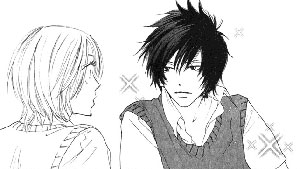
 Koukou Debut by Kawahara Kazune
 Tokyo Boys and Girls by Miki Aihara

 Gainax is out to destroy our lives again and leave us in a deep state of insanity. Not that Evangelion hasn’t done enough damage by raising a legion of otakus chanting Rei Ayanami’s name like an anthem. Having studied the otaku culture well (remember Otaku no Video?), they got to squeeze out a lot from their best effort yet.